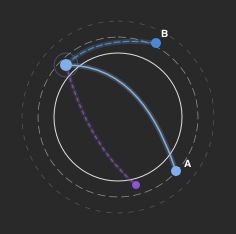
COGR - Constant Growth Example for a Bakery Chain
DESIGNATION - Data Design Studio
COGR — Constant inflow: a theoretical lens, not a management failure
No real bakery runs on pure COGR. The owner notices the unsold loaves, or the empty shelf at noon, and adjusts. That adjustment — however informal — is already the beginning of a feedback loop. COGR is not a description of how businesses actually run. It is a controlled starting point for asking sharper questions.
The real question is not whether to close the loop, but how.
Perfect demand matching is impossible. Once you accept that, you face a fundamental asymmetry: surplus and deficit are not mirror images. Surplus is concrete — unsold inventory, idle capacity — uncomfortable but known. Deficit is softer and often invisible. The customer who was not served simply goes elsewhere, leaving no trace in any report. A demand not served may once lead to loosing a customer overall. But overplanning has its own compounding logic and leads to decisions how to handle waste.
What would happen if your process is measured on waste?
Every batch driven production process is implicitly a bet on demand stability. The interesting management question is not how to eliminate COGR-type processes, but how to instrument them well enough that the gap becomes visible before it becomes material.
That is the bridge to what comes next. REGU closes the loop — but with what signal, at what cost, with what delay? DERE shows what happens when the correction arrives too late. Each archetype is an answer to a problem that COGR first makes legible.