As managers, we are constantly projecting outcomes. Thinking fast, we tend to get things wrong. Now is the time to start with thorough judgement before making business decisions. How could that look like?
Gut predictions are often just one story with linear and oneway dependencies, told with simplyfied causes and false confidence. Seems to be controllable, but when reality diverges as always, we scramble.
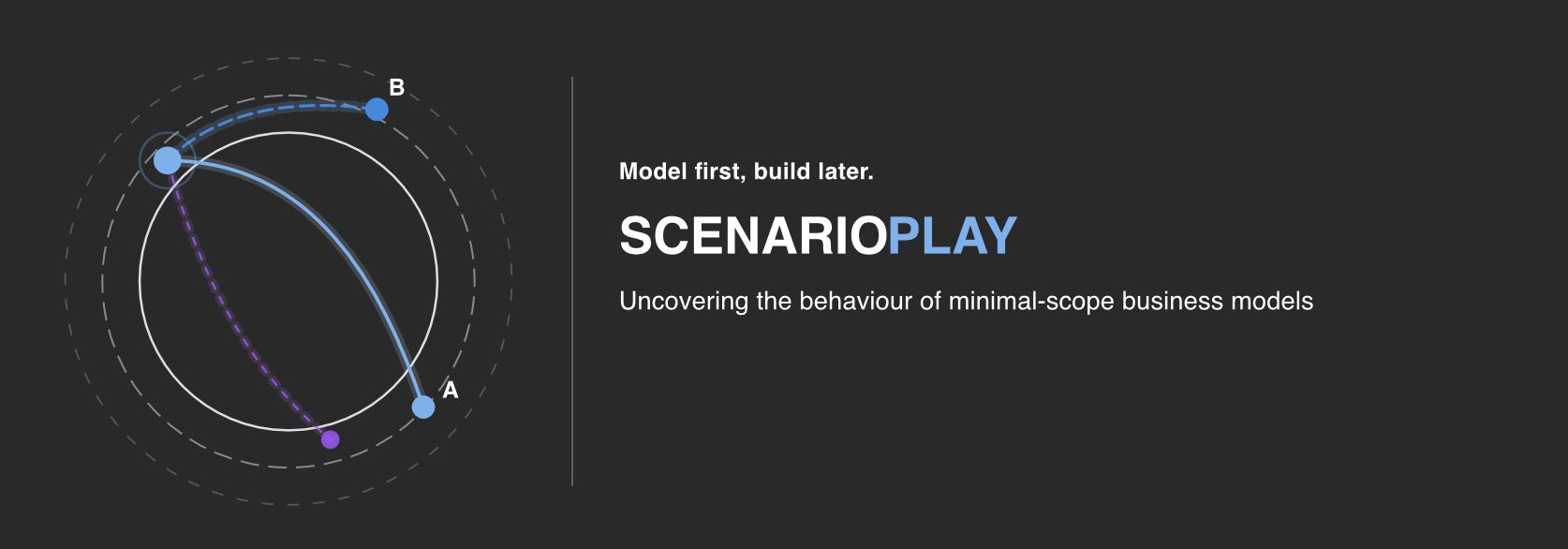
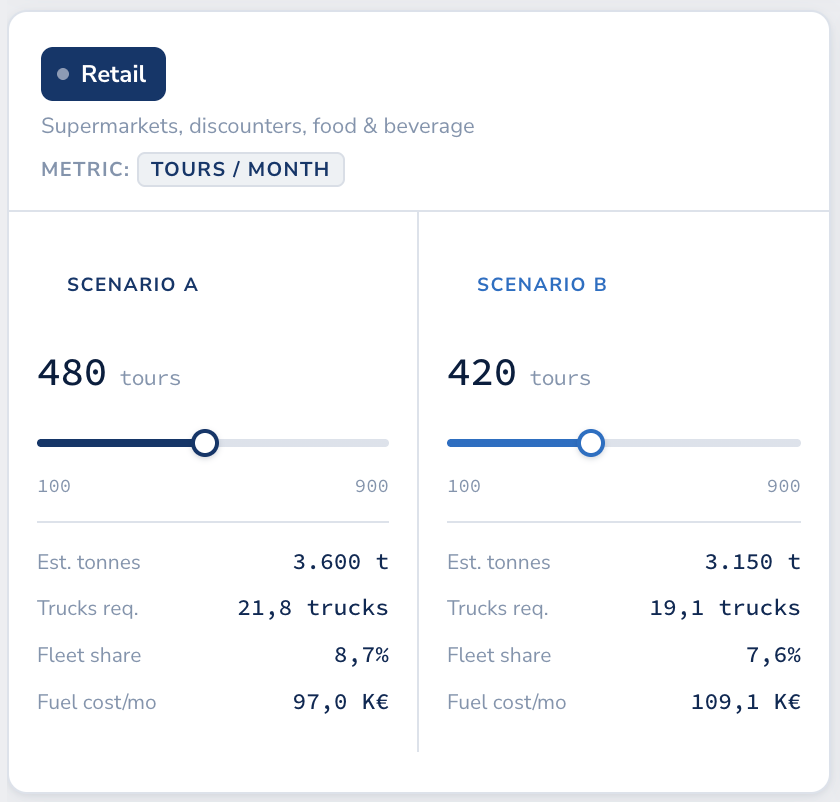
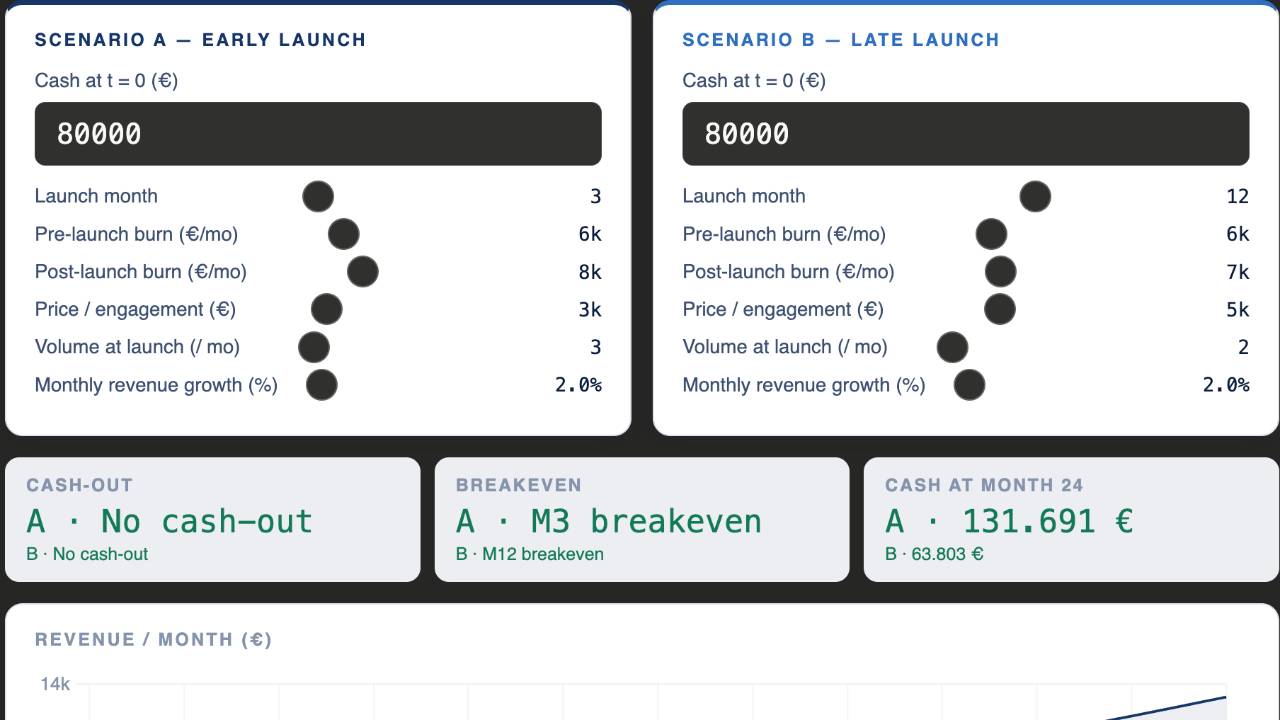
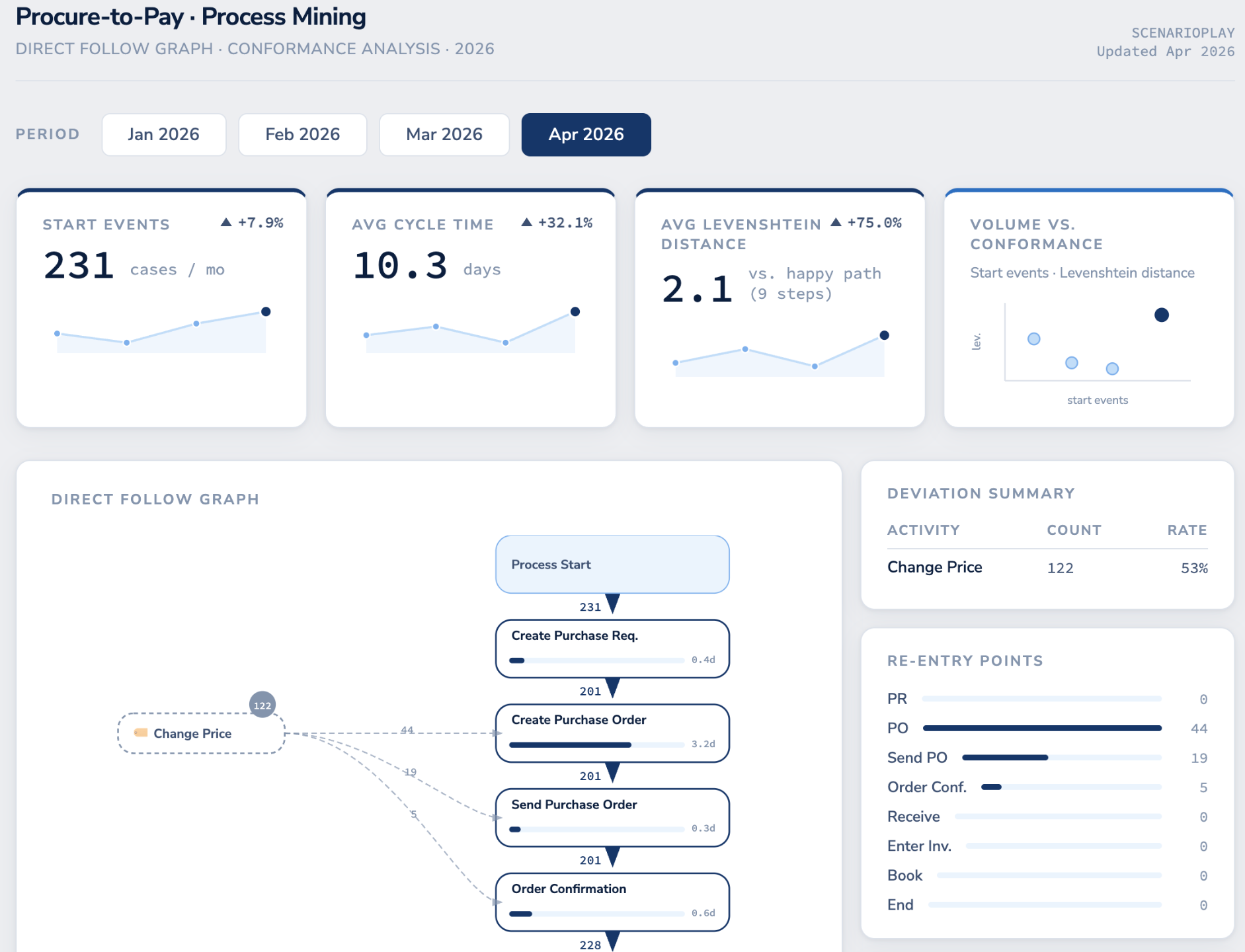
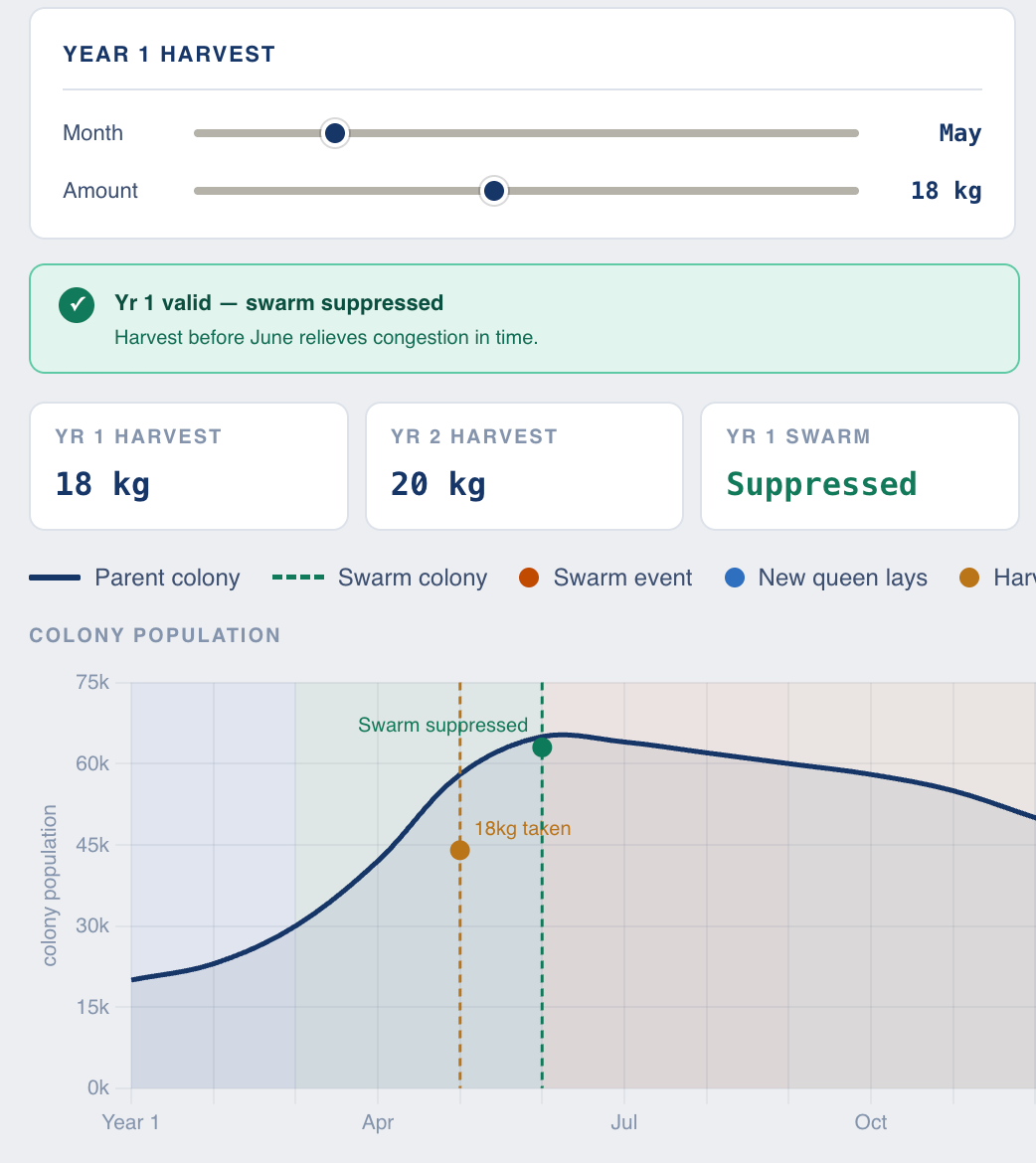
SCENARIOPLAY is a structured framework for uncovering multiple outcomes. It slows you down just enough to ask the right questions: What are the real dependencies in your business system? Which assumptions are load-bearing? What happens when two things go wrong at once? The result isn't just a better outcome. It's a minimal decision-maker tool, which can handle different paths and assumptions ready for discussions with stakeholder.
Seeing feedback loops in action
Every business is full of feedback loops — rising sales lead to more hiring, which improves capacity, which enables more sales, or conversely, overextension leads to quality drops and customer loss. System Zoo models make these loops visible and quantifiable. Managers can literally watch how a decision today ripples through the organization over months or years.
Testing decisions before making them
Scenarios allow leadership to run "what if" experiments at zero cost and zero risk. What happens to cash flow if we scale production by 30%? How does a price cut affect long-term market share when competitors react? What if demand drops suddenly? The models provide a sandbox where bad strategies fail safely — on screen, not in reality.
Understanding delays and unintended consequences
One of the most valuable lessons from system dynamics is that cause and effect are often separated in time. A marketing campaign may take months to affect revenue; hiring decisions play out over quarters. Bossel's models train managers to think in terms of these delays, reducing the dangerous tendency to overcorrect or panic when results don't appear immediately.
Modeling growth and limits
The logistic growth models from the System Zoo are directly applicable to market development, product adoption curves, and organizational scaling. They help businesses recognize early when they are approaching natural limits — market saturation, resource constraints, or capacity ceilings — before those limits become crises.
Simulating competition and market dynamics
Models on competition, marketing, consumption, and escalation translate almost directly into business strategy. Companies can simulate how a price war evolves, how customer loyalty erodes, or how two competing firms co-develop in a shared market — insights that are very hard to gain from spreadsheets alone.
Building a shared mental model
Perhaps the most underrated benefit is organizational: when a leadership team builds and discusses a simulation together, they are forced to make their assumptions explicit. Disagreements about how the business works surface early, and consensus on strategy becomes far more grounded and robust.
Applying system thinking to business scenarios shifts decision-making from intuition-based to evidence-based — not through big data, but through a deeper understanding of structure, dynamics, and cause and effect over time.
Get in touch, if this sounds relevant.
We are glad to hear about your project.
Let us know if we can help and we come back how your project would look like. No long intake forms.
Mail to office @designation.eu