Procurement in Retrospective
DESIGNATION - Data Design Studio
Four months. Four different processes.
Pull up the same procure-to-pay process across January to April and you don't see one process. You see four variations of it — same steps on paper, different behaviour in practice. Volume shifts. Dwell times stretch. Deviations cluster differently depending on what suppliers are doing, what buyers are under pressure to resolve.
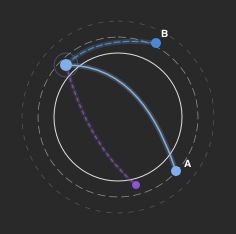
One way to measure how far a month's actual behaviour drifted from the intended flow is Levenshtein distance — a concept borrowed from linguistics, where it counts the minimum number of edits needed to turn one word into another. Here it counts the edits needed to turn what actually happened in a case into what was supposed to happen. A distance of 1.2 means cases were, on average, not far off. A distance of 2.1 means something more systematic was going on.
March sits at 1.2. April at 2.1. Same process, different conditions, meaningfully different outcomes.
Whether that difference matters — and what you'd want to do about it — depends on what you're managing for. But it's hard to have that conversation if you're only looking at a single period average. The historical view doesn't give you answers. It gives you variation. And variation is where scenarios live.
Procure-to-Pay · Process Mining
DIRECT FOLLOW GRAPH · CONFORMANCE ANALYSIS · 2026
Updated Apr 2026
Distance
(9 steps)
| Activity | Count | Rate |
|---|
→ Order Conf. → Receive
→ Enter Inv. → Book → End
──────────────────
9 steps · Levenshtein base = 0